Tell us where you want to sell. Our platform shows exactly which documents, notifications and Responsible Person services your products need — then our regulatory team gets it done.
EU Responsible Person based in HungaryCPNP free for RP clientsCPSR in EN · TR · FR · DE
kompasseurope.eu
•••
We make a face serum outside the EU. What do we need to sell in Germany and the UK?
KE
For EU + UK you need:
EU Responsible Person + CPNP
UK Responsible Person + SCPN
CPSR & PIF (EU and UK versions)
Label review for both markets
2005Group founded
15Languages
ISO 9001:2015Certified quality system
59Accredited lab analyses
Compliance Navigator
What does your product need? Find out in four clicks.
Answer four short questions. You'll get a market-by-market checklist and can send it to us as a quote request.
Where is your company registered?
This decides whether you need an external Responsible Person.
Select one option
Regulatory assistant
Ask anything about cosmetic regulations.
Instant answers to the questions our clients ask most — Responsible Person, CPSR, CPNP, labels, UK, USA and more. For your specific product, our team follows up personally.
Kompass AssistantOnline · replies instantly
Knowledge base
Hello! I'm the Kompass assistant. Ask me about Responsible Person, CPSR, CPNP, labelling, UK, USA (MoCRA), Türkiye (ÜTS) and more.
Popular topics
Prefer a person?
Our regulatory specialists review your formula and labels and reply with a concrete plan.
We organise the tests your safety assessment needs through accredited partner laboratories and add the reports directly to your CPSR and PIF.
Accredited laboratory
Microbiological testing
Bacteria, yeasts and moulds — the microbiological quality of each batch.
ISO 21149ISO 16212ISO 21150 · 22717 · 22718 · 18416
What it shows
Counts the bacteria, yeasts and moulds in the product and checks for specified pathogens, showing that the product is safe to use and will not spoil.
When it is needed
For the microbiological quality section of the CPSR and for batch release — especially for water-based products.
How it works
Aseptic sampling
Dilution or membrane filtration
Incubation on selective media
Colony counting and identification
Evaluation against acceptance limits
Reference methods
ISO 21149 — aerobic mesophilic bacteria
ISO 16212 — yeasts and moulds
ISO 21150 · 22717 · 22718 · 18416 — E. coli, P. aeruginosa, S. aureus, C. albicans
ISO 17516 — microbiological limits
Challenge test (preservative efficacy)
Shows that the preservative system protects the product during use.
ISO 11930ISO 29621
What it shows
The product is deliberately inoculated with known microorganisms and their reduction is measured at set intervals, proving that the preservation protects the product throughout its use.
When it is needed
For water-containing and other products at microbial risk; low-risk products may be exempted after a documented risk assessment.
How it works
Inoculation with reference strains
Incubation under controlled conditions
Counts at defined intervals over 28 days
Comparison with acceptance criteria
Conclusion for the safety assessor
Reference methods
ISO 11930 — evaluation of antimicrobial protection
Strains: P. aeruginosa, S. aureus, E. coli, C. albicans, A. brasiliensis
ISO 29621 — risk assessment for low-risk products
Stability & packaging compatibility
Confirms the product stays stable in its packaging until the end of its shelf life.
ISO/TR 18811
What it shows
Tracks how appearance, colour, odour, pH, viscosity and weight change under different storage conditions, and whether the formula interacts with its packaging. The results support the shelf life or PAO on the label.
When it is needed
For every new formula or packaging change — required data for the CPSR.
How it works
Representative samples in final packaging
Storage at high, room and low temperature, plus light
Analyses at defined intervals
Comparison with starting values
Shelf-life / PAO conclusion
Reference methods
ISO/TR 18811 — guidelines on stability testing
Parameters: appearance, colour, odour, pH, viscosity, weight loss
Compatibility in the final container
Dermatological testing
Skin tolerance on volunteers or skin models — the basis for “dermatologically tested” claims.
OECD 439
What it shows
Evaluates the risk of irritation or sensitisation, either on volunteers under dermatologist supervision or on reconstructed human skin models.
When it is needed
When you claim “dermatologically tested” or similar, and for products for sensitive skin, babies or the eye area.
How it works
Study design (patch test or in vitro model)
Volunteer selection and consent
Application under occlusion
Reading of skin reactions at set times
Report evaluated by a dermatologist
Reference methods
Patch test / HRIPT on volunteers
OECD 439 — in vitro skin irritation
Under dermatologist supervision
Test plans are set per product by the safety assessor. Prices are quoted on request.
Full test catalogue
59 analyses carried out in accredited laboratories. Prices on request.
Preservatives & restricted substances
1,4-Dioxane
GC-MS/headspace quantification of this carcinogenic by-product of ethoxylated surfactants (SLES, PEG, polysorbates), proving it stays below the permitted trace level.
MethodIn House MethodSample25 g / mLReport3 days
Preservatives & restricted substances
2-Phenoxyethanol
Quantifies 2-phenoxyethanol, one of the most widely used preservatives, by chromatography per Directive 96/45/EC, to verify compliance with the 1.0% limit in finished products.
Method96 / 45 / ECSample50 g / mLReport3 days
Preservatives & restricted substances
Acetone
Quantifies acetone in nail-polish removers and other products, for the technical file or to substantiate “acetone-free” claims.
MethodIn House MethodSample5 g / mLReport3 days
Microbiology
Aerobic mesophilic bacteria count
Determines the total viable bacterial load per ISO 21149 to confirm production hygiene and product safety — a basic, mandatory step for every product file.
MethodISO 21149Sample100 g / mLReport7 days
Alcohols
Alcohol impurities
GC-FID determination of volatile impurities such as methanol, ethyl acetate and acetaldehyde in alcohol-based products, proving the absence of prohibited toxic impurities.
MethodIn House Method (AOAC 984.14)Sample50 g / mLReport3 days
Alcohols
Alcohol strength
Measures the ethanol content of colognes, perfumes, toners, hand gels and hair lotions, verifying the alcohol degree declared on the label.
MethodIn House Method (ISO 4801)Sample100 g / mLReport3 days
Alcohols
Alcohol-free verification
GC-FID/GC-MS screening for ethanol and its derivatives, used to substantiate “alcohol-free” claims on baby, eye-area and sensitive-skin products.
MethodIn House MethodSample50 g / mLReport3 days
Heavy metals
Aluminium (Al)
Quantifies aluminium compounds in deodorants, antiperspirants, sunscreens and colour cosmetics to verify compliance with safe-use limits.
MethodIn House Method (NMKL 161)Sample25 g / mLReport5 days
Preservatives & restricted substances
Ammonia
Determines free ammonia in hair dyes, bleaches and nail products, to check legal limits or substantiate “ammonia-free” claims.
MethodIn House MethodSample50 g / mLReport3 days
Surfactants & composition
Anionic surfactants
Quantifies anionic surfactants — the main cleansing and foaming agents in shampoos, shower gels and liquid soaps — per ISO 2271, to verify the specification.
MethodISO 2271Sample50 g / mLReport3 days
Heavy metals
Antimony (Sb)
Quantifies antimony, a risk metal that can migrate from pigments or packaging into colour cosmetics such as eyeshadow and blush.
MethodIn House Method (NMKL 161)Sample25 g / mLReport5 days
Heavy metals
Arsenic (As)
Quantifies arsenic, a toxic element that can enter cosmetics from natural minerals, clays or water-based raw materials, against legal limits.
MethodIn House Method (NMKL 161)Sample25 g / mLReport5 days
SDS · UFI · PCN
Safety Data Sheets in the languages of 40 countries.
REACH Annex II (EU 2020/878) and CLP-compliant SDS, UFI code generation and Poison Centre Notification (PCN) via ECHA. Select your target countries to see which languages you need.
SDS
16-section safety data sheet under REACH Annex II, CLP classification, H/P statements and pictograms, kept up to date.
UFI
Unique Formula Identifier generated from your VAT number and formulation number, ready to print on the label.
PCN
Poison Centre Notification under CLP Annex VIII, submitted through the ECHA portal for every target country.
0 countries·0 languages
Language versions follow each country's official languages; the final set is confirmed per product.
How it works
From documents to market, in five steps.
Share your filesFormula, raw material data and labels via a secure upload.
Gap reviewWe list what's missing and which tests are needed.
CPSR & PIFSafety assessment and a complete product file.
NotificationCPNP, SCPN, ÜTS or FDA listing submitted.
On the marketWe stay your Responsible Person and handle authority requests.
Why Kompass
One partner from formula to shelf.
01One contact for everything
Responsible Person, CPSR, notifications and lab tests under one roof — no hand-offs between suppliers.
02Accredited laboratories
59 analyses in accredited labs; reports go straight into your CPSR and PIF.
03Many markets, clear terms
EU, UK, USA, Türkiye and the EAEU, each with its own clear agreement.
04Software-driven service
Instant checklists and answers online; our experts follow up personally.
Coverage
Headquartered in Hungary. Working across markets.
Our EU base in Hungary acts as your Responsible Person, while partner networks cover the UK, USA, Türkiye, the Eurasian Economic Union and more.
HungaryEU headquarters
United KingdomUK RP · SCPN
TürkiyeÜTS · RP
UkraineMarket support
EAEUEAC · SGR
USAFDA · MoCRA
CanadaHealth Canada
ASEANACD notification
Ready to bring your products to new markets?
Talk to our regulatory team about compliance, testing and market entry.
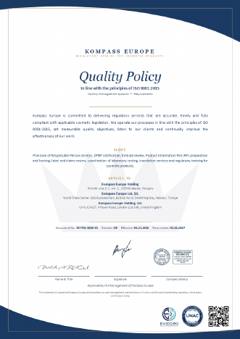
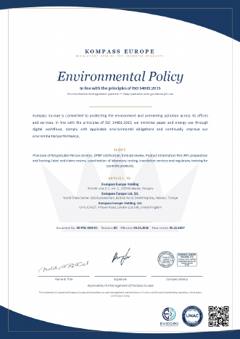
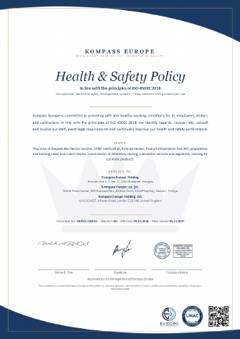
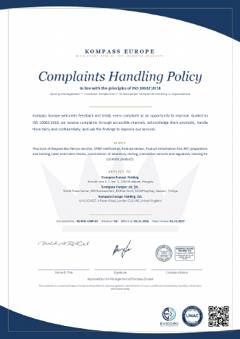
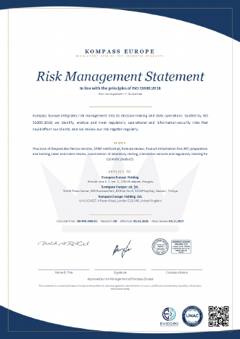
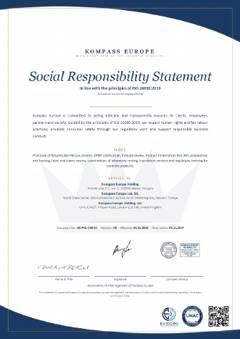
ⓘ These policies describe Kompass Europe's own management commitments, aligned with the ISO standards named. They are not certificates of conformity issued by a certification body.